The Perfect Brush: Types and Uses in Ceramic Painting
Share
Choosing the right brush is essential when painting ceramics. Each type of brush offers a different finish and adapts to different techniques. Let's look at the main types and their applications in ceramic craftsmanship.
1. Types of Brushes and Their Applications
Round Brushes
Perfect for detailed strokes and fine lines.
Ideal for freehand painting and decorating small surfaces.
Flat Brushes
They are used to cover large areas evenly.
They are perfect for applying base ceramic glazes.
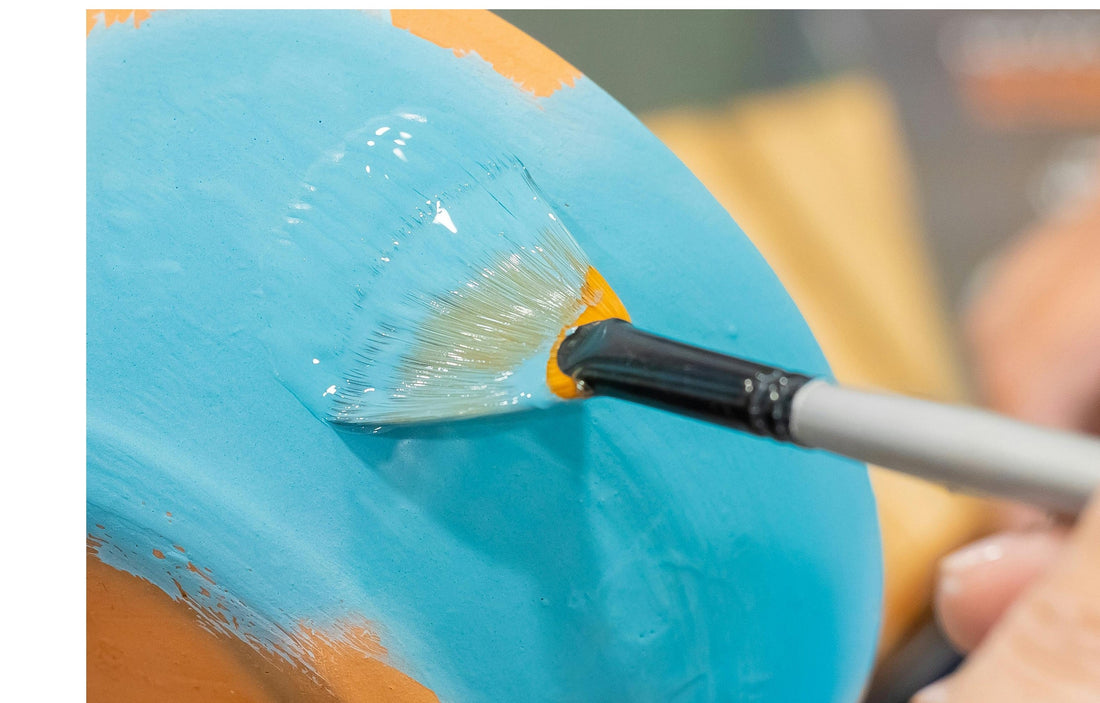
Fan Brushes
Useful for creating textures and gradient effects.
Perfect for blending colors on ceramic surfaces.
Cat Tongue Brushes
They combine the precision of a round brush with the coverage of a flat one.
They are used to blend and create smooth transitions.
Detail or Liner Brushes
Fine and elongated bristles for very thin lines.
Ideal for writing or making detailed drawings on ceramics.
2. Natural Hair Brushes vs. Synthetic
Natural Hair
Made from natural bristles like sable or goat hair.
They absorb and retain ceramic glaze better.
Ideal for smooth strokes and gradients.
Synthetic Hair
Made with synthetic fibers like nylon or polyester.
More economical and durable.
They work well for precise details and dense glazes.
3. Tips for the Use and Maintenance of Brushes in Ceramics
Cleaning: Wash the brushes immediately after use to prevent the glaze from hardening.
Storage: Store the brushes horizontally or with the bristles facing up to avoid deformities.
Proper Use: Do not press the bristles too hard, as this can deform them and affect the precision in applying the glaze.
Choosing the right brush can transform your technique and improve the quality of your ceramic pieces. By knowing the different types and their uses, you can achieve better results in each project. Experiment with different brushes and discover which one best suits your artistic style.