
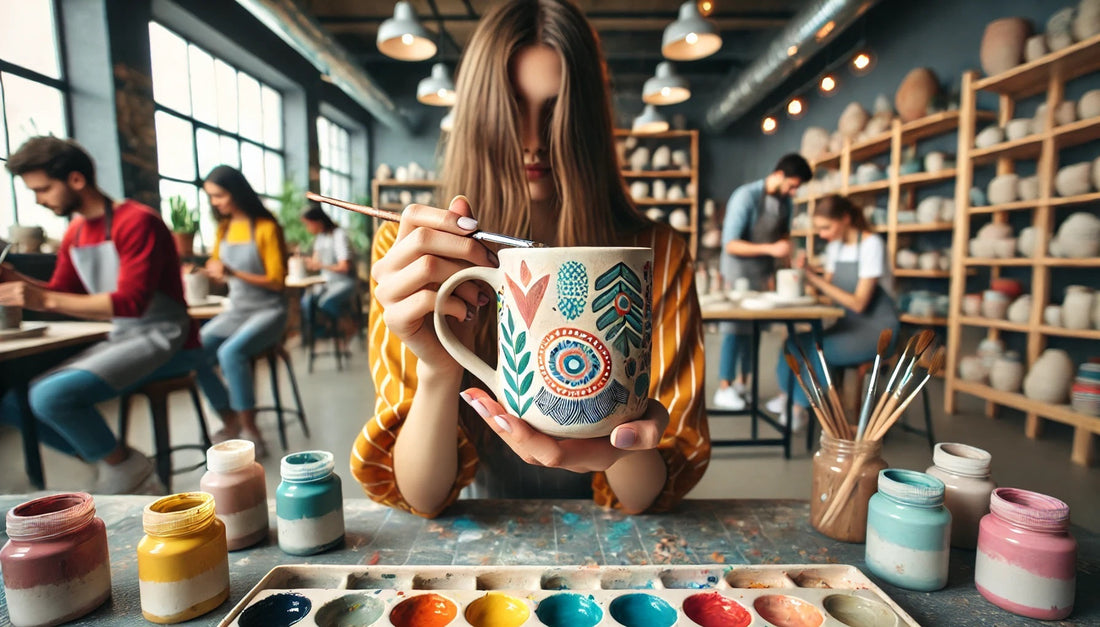
How to Get Started in Hand-Painted Ceramic Craft: A Guide for Beginners
Share
Painting ceramics is a creative and enriching activity that allows you to personalize unique pieces with your own style. If you are passionate about art and want to start in this discipline, it is essential to know the right techniques and materials. From applying slip to using ceramic glaze, each step influences the final result. We explain how to hand paint ceramics simply, providing you with the essential knowledge to start achieving professional finishes and enjoy the creative process to the fullest.
What Do You Need to Paint Ceramics?
Before diving into this world, make sure you have the right materials:
Bisque ceramic pieces already fired and ready to decorate. If you get the hang of it, you'll end up making your own creations.
Slip: a mixture of liquid clay with colorants to apply on raw ceramic. The best way to understand the material is to do tests and see results.
Ceramic glaze: it is used to give shine and protection to the paint after firing.
Brushes of different sizes to achieve different strokes and effects.
Sponges and carving tools to add textures and details.
A ceramic kiln for the final firing (if you don't have one, look for a workshop that offers this service). To start, it's better to take your pieces to a workshop.
Basic Techniques for Hand Painting
1. Painting with Engobe
Engobe is an excellent option if you want to achieve opaque colors and matte effects. It is applied to unfired ceramics and allows you to experiment with textures and overlays. Once dry, it can be carved with tools to add unique details.
2. Use of Ceramic Glaze
If you are looking for a shiny and durable finish, ceramic glaze is the key. It is applied after the first firing and, after the final baking, provides a protective layer and vibrant colors. You can play with transparent or colored glazes to achieve different effects.
3. Sponging Technique
Ideal for creating soft textures and gradients, this technique consists of applying paint with a sponge instead of a brush. It is perfect for hand-painting mugs and achieving a handcrafted finish.
4. Freehand Painting
If you like detail and free design, you can paint by hand with fine brushes. It is one of the most creative techniques and allows you to personalize each piece with unique drawings. We recommend marking the piece with a pencil before painting.
Tips for a Perfect Finish
Clean the piece well before painting to remove dust and residues.
Apply thin layers and let dry well between applications to avoid lumps.
Test the colors on a sample before applying them to the final piece.
Use quality ceramic glaze to ensure that your design lasts with use and washes.
Let the pieces dry well before firing them to avoid disappointments when seeing the final result.
Summary
Painting ceramics is a fun and accessible process for any level of experience. With the right tools and some practice, you can create unique pieces, from simple hand-decorated mugs to more elaborate works. Ready to get started? Explore our store and find everything you need to bring your creativity to life! Our customer service team can assist you with any questions you may have.