How to glaze ceramics without a brush: alternative techniques for unique results
Share
The brush is not the only tool for glazing ceramics. In fact, there are many ways to apply glaze that offer textures, finishes, and effects impossible to achieve with a simple brush stroke. If you're looking to experiment, improve your results, or simply try something new, here are several alternative techniques for glazing ceramics without a brush that will inspire you.
1. Dipping: quick and even coverage
One of the most popular techniques among ceramicists. It consists of immersing the piece directly into the glaze bucket.
✅ Perfect for achieving a uniform and quick layer.
✅ Ideal for mass production or functional pieces.
⚠️ Make sure the glaze is well sifted and has the right density.
2. Pouring: creative control over the glaze
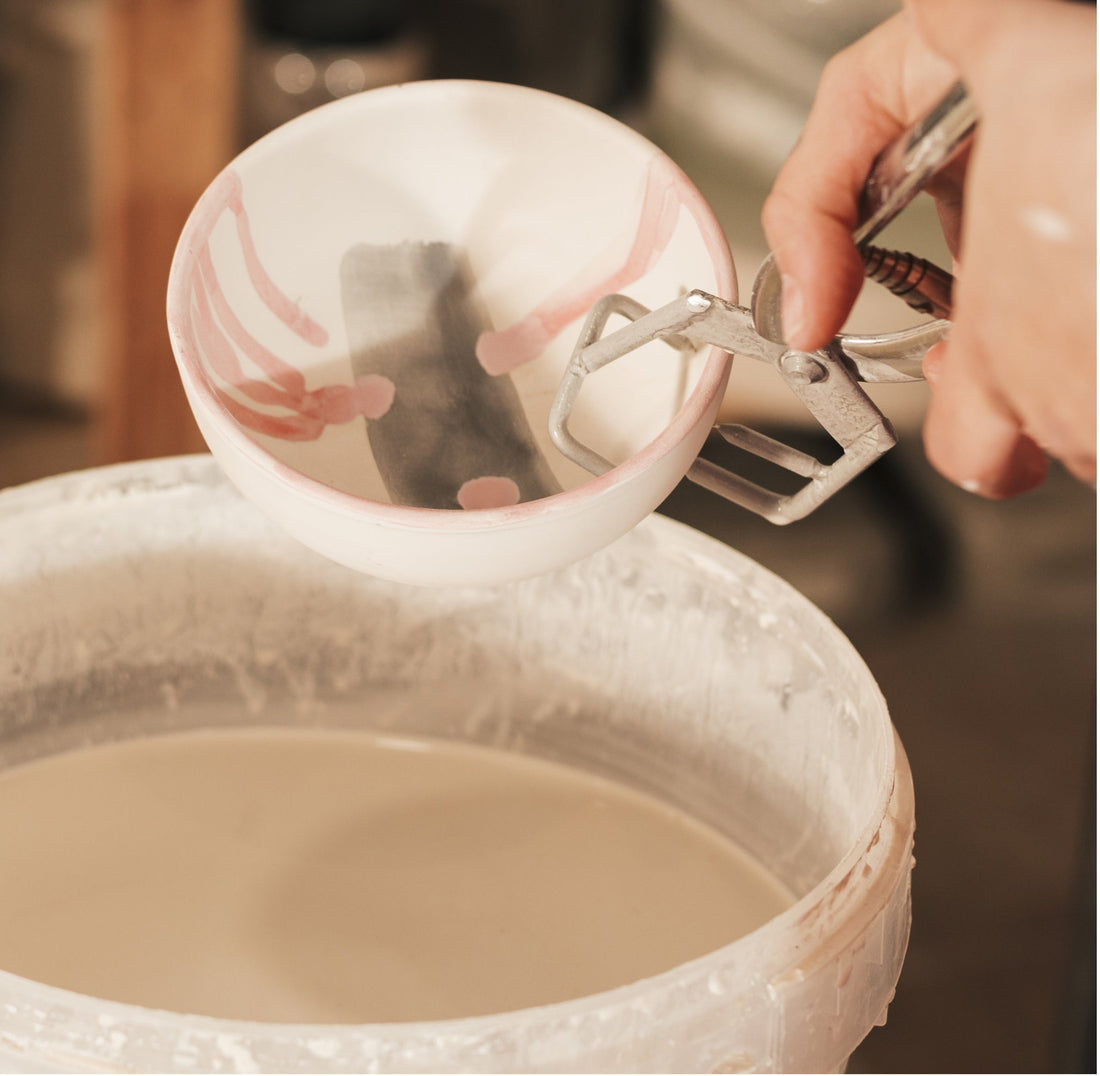
With this technique, you pour the glaze over the piece using a container or ladle.
✅ Allows you to play with different colors and directions.
✅ Ideal for abstract effects and overlapping layers.
⚠️ It is important to have a tray to collect excess glaze.
3. Glazing by spraying (spray)
Using an airbrush or glazing gun, you can apply thin and even layers.
✅ Ideal for achieving gradients and transition effects.
✅ Very useful when you want to apply glazes precisely in specific areas.
⚠️ You need a glazing booth or good ventilation.
4. Glazing with a sponge or cloth
Very useful technique for rustic and textured effects.
✅ Ideal for applying glaze in small areas or on reliefs.
✅ Perfect for slips or decorative glazes.
⚠️ The amount of glaze applied may vary depending on the pressure exerted.
5. Glazing by splashing or dripping
With a stiff brush or an old toothbrush, you can splash the glaze onto the piece.
✅ Creates very organic effects, like “galaxy” or "lava texture".
✅ Very commonly used in decorative pieces.
⚠️ Requires practice to control the amount of glaze.
General tips for glazing without a brush:
Sift the glaze well before using it to avoid lumps.
Control the thickness of the applied layer: too much can cause defects during firing.
Test piece trial to see how the glaze reacts with your clay and temperature.