Discover the best techniques for painting ceramics
Share
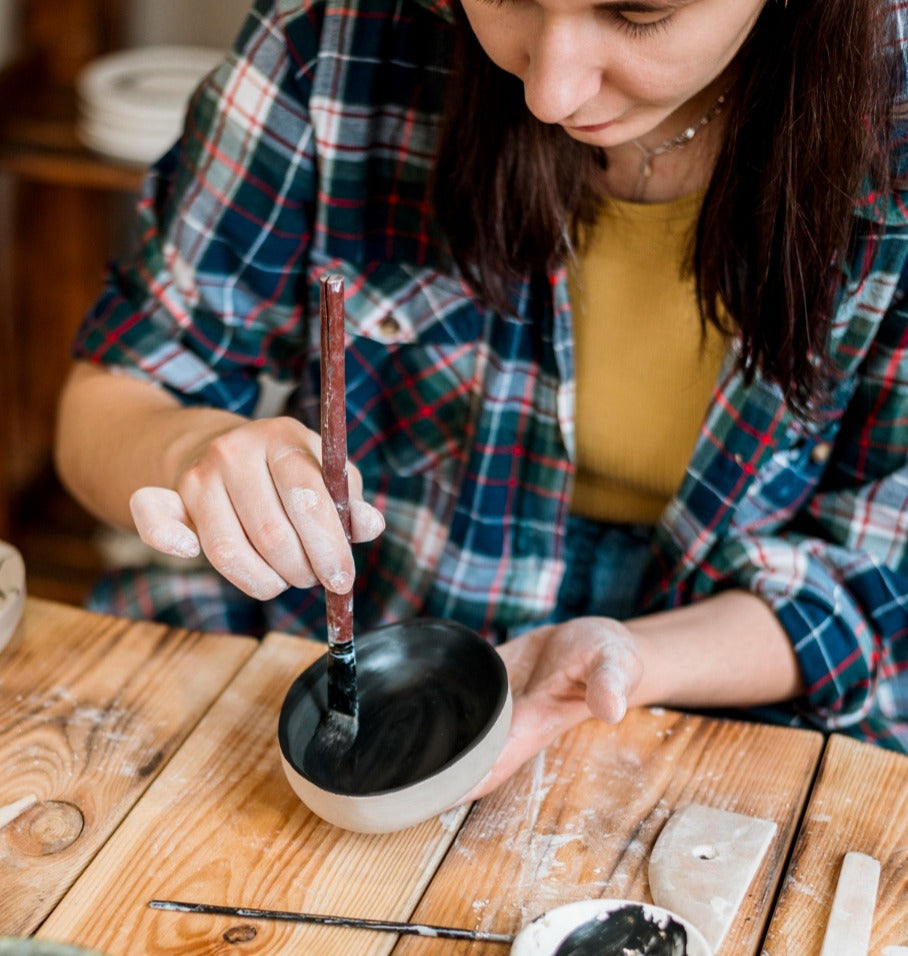
Ceramics is an ancient art that has evolved over time, giving rise to multiple painting techniques that allow for personalizing each piece with unique colors and finishes. If you are passionate about ceramic craftsmanship or want to improve your technique, in this entry we tell you the main ways to paint ceramics, their benefits, and their possible drawbacks. Remember, these are just a few tips; there are countless techniques, methods, and procedures to do it. Our recommendation is always to do trial/error to achieve the result you expect.
1. Painting with Engobes
Engobes are a mixture of liquid clay with pigments that are applied to the ceramic before the first firing. This technique allows for obtaining matte colors and interesting textures.
Advantages:
- Great adherence to the piece.
- Can be sgraffitoed or combined with other techniques.
- Offer a natural and earthy finish.
Disadvantages:
- Colors often change after firing.
- Need a layer of clear glaze for greater durability.
2. Ceramic Glazes
Ceramic glazes are glazed coatings applied to the piece before the final firing. They can be glossy, matte, or satin.
Advantages:
- Wide variety of colors and effects.
- Increase the piece's durability.
- Allow for professional finishes.
Disadvantages:
- Require prior testing to predict the final result.
- Some glazes may contain heavy metals and require caution in their use.
3. Painting on Bisque
This technique involves applying pigments, oxides, or glazes to a piece that has already been fired once (bisque) and then subjecting it to a second firing (double firing).
Advantages:
- Greater control over the design.
- Allows for precise details and fine decorations.
- Compatible with various combined techniques.
Disadvantages:
- May require multiple firings.
- Some colors may fade if not protected with glaze.
4. Ceramic Screen Printing
Ceramic screen printing is an advanced technique that allows reproducing patterns and designs with great precision using screen meshes and pigments.
Advantages:
- Ideal for mass production.
- Allows complex details and uniformity in designs.
- Compatible with multiple surfaces and finishes.
Disadvantages:
- Requires specialized materials and tools.
- The initial investment can be high.
- Complicated to use this at home.
5. Airbrushing in Ceramics
The airbrush allows pigments to be applied evenly, achieving soft blending effects and smooth transitions between colors.
Advantages:
- Smooth and professional finishes.
- Allows gradients and color mixing.
- Three-dimensional effects can be created.
Disadvantages:
- Needs practice and precision.
- Requires specialized tools.
In summary, each ceramic painting technique has its own characteristics, and the choice will depend on the type of finish you are looking for and the available resources. If you want to explore more options, in our store you will find high-quality pigments, slips, glazes, and raw materials to take your creations to the next level. Dare to experiment and discover your unique style in ceramics!